
Life sciences and biotechnology organizations rely on precision scientific instruments to conduct research, validate data, and scale regulated production environments. As innovation cycles accelerate and funding milestones shift, companies must balance continuous investment in scientific equipment with disciplined capital management.
NFS Capital provides life sciences equipment financing for business-critical projects starting at $150,000, including scientific instrumentation, laboratory automation, production equipment, multi-vendor lab projects, and equipment tied to research, commercialization, or expansion.
Life sciences equipment financing provides biotechnology, pharmaceutical, and research-driven organizations with structured access to essential scientific instruments without requiring full upfront capital expenditure. Through equipment leases or secured financing arrangements, companies can deploy laboratory and production technology while aligning payments with operational timelines and funding cycles.
This approach is commonly used by organizations operating in regulated research, clinical, and manufacturing environments where equipment plays a central role in discovery, validation, and commercialization.

Financing life sciences equipment to modernize research operations.
Scientific progress depends on timely access to precision instruments.
— Cash Preservation: Preserve working capital for R&D and clinical operations
— Funding Alignment: Align equipment costs with grant funding, investor milestones, or commercialization timelines
— Technology Access: Upgrade scientific instrumentation as technology evolves
— Non-Dilutive Capital: Finance equipment while preserving equity capital for R&D, hiring, and growth.
— Growth Support: Support phased lab buildouts, research expansion, or production scale-up
In industries where innovation cycles are measured in months rather than years, structured financing can provide operational continuity without interrupting growth.
NFS Capital structures flexible life sciences equipment financing solutions to align with how research and production organizations operate within regulated environments.
Life sciences projects often involve milestone-based funding, evolving regulatory requirements, and complex ownership structures that require flexible evaluation.
This flexibility extends to fast life sciences equipment financing when research and production timelines are tied to funding milestones, and to complex credit equipment financing for pre-revenue or grant-funded organizations where funding visibility, project scope, equipment value, sponsor support, or other business strengths support the financing request.
Life sciences financing supports a broad range of scientific, laboratory, and production equipment, including:
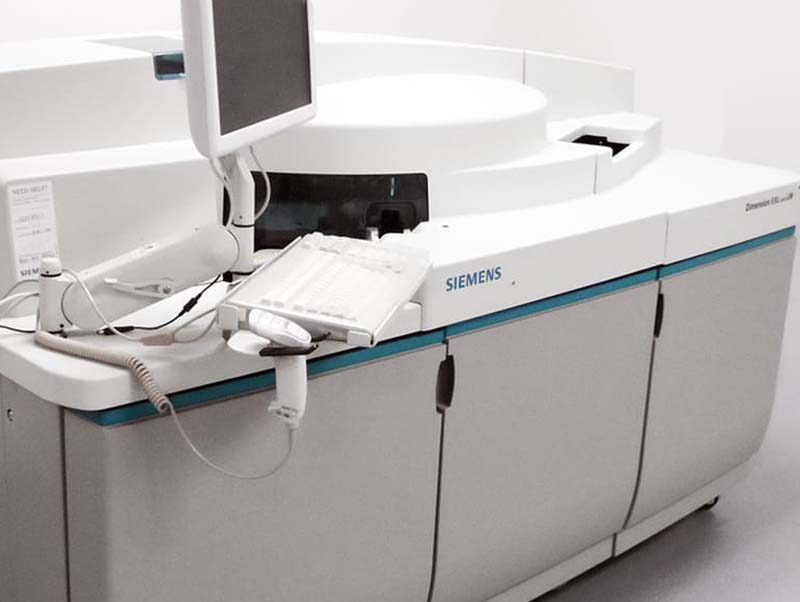
Biotechnology & Genomics Equipment
Next-generation sequencing (NGS) systems, whole genome sequencing platforms, genetic analyzers, spectrometers and chromatography systems, cell imaging and analysis platforms.

Laboratory & R&D Equipment
Environmental chambers, incubators and centrifuges, laboratory automation systems, high-throughput screening equipment, analytical testing instruments.

Life Sciences Manufacturing Equipment
Bioprocessing systems, automated packaging systems, temperature-controlled production equipment, process control technology.

Supporting Technology Infrastructure
Data storage systems, laboratory servers, compliance and data management software platforms.
These equipment categories reflect the demands of regulated environments, where reliability, validation, and lifecycle planning are essential.
Life sciences financing is typically used by organizations operating in regulated environments where specialized equipment is central to research, compliance, and production.
Early-Stage & Venture-Backed Companies
Emerging biotechnology and genomics companies deploying core research infrastructure with defined funding visibility, sponsor support, or other business strengths.
Growth-Stage & Commercializing Firms
Organizations scaling laboratory capacity, expanding pilot production, or preparing for regulatory milestones.
Established Manufacturers & Research Institutions
Mid-market to enterprise-scale operations modernizing production lines or upgrading analytical systems.
Qualification focuses on operational viability, funding visibility, and project scope rather than solely on traditional credit metrics.

“Life sciences organizations operate at the intersection of scientific innovation and regulatory discipline. Financing should support that balance and be structured to advance research, expansion, and long-term progress with confidence.”
– Dana Calumby, Chief Financial Officer, NFS Capital
OPERATING & FMV LEASES
Allow equipment deployment with end-of-term flexibility for upgrades, renewals, or purchases.
CAPITAL LEASES & SECURED LOANS
Support long-term ownership strategies for instruments with extended lifecycle utility.
MASTER LEASE AGREEMENTS (MLA)
Enable multiple equipment acquisitions under a single financing umbrella for a phased lab expansion.
STEP-UP OR MILESTONE-BASED PAYMENTS
Align payment schedules with grant funding, funding rounds, or commercialization timelines.
UP TO 100% EQUIPMENT FINANCING
Cover equipment, installation, and deployment costs within a single structured arrangement.
| Business need | Financing approach to consider | Preserve cash for operations | Equipment lease or up to 100% financing |
|---|---|
| Own the equipment long term | Secured equipment loan or capital lease |
| Finance a time-sensitive purchase | Expedited equipment financing review |
| Fund equipment tied to growth or expansion | Structured equipment financing |
| Manage multiple purchases over time | Master lease agreement |
| Unlock capital from owned equipment | Sale-leaseback |
| Include soft costs such as installation, delivery, or setup | Project-based equipment financing, when appropriate |
To begin, provide NFS Capital with the estimated financing amount, equipment or vendor information, intended use, desired timing, and basic information about your organization.
This initial information helps our team understand the project and determine the most appropriate next steps.
NFS Capital’s life sciences equipment financing process is designed to move from initial project review through documentation and funding.
Project Review
We review the equipment, vendors, financing amount, intended use, research or production requirements, funding considerations, and desired timing.
Business And Credit Evaluation
Our team considers operating history, management experience, financial performance, funding visibility, collateral, equipment use, and the role the equipment will play in research, commercialization, or production.
Financing Structure And Documentation
NFS Capital develops a financing structure aligned with the equipment, cash flow, funding milestones, project requirements, and anticipated deployment schedule.
Funding And Vendor Coordination
We coordinate documentation and funding with the customer and equipment vendors. Multi-vendor purchases, phased lab buildouts, and project-based funding may be accommodated when appropriate.
A clinical genetics laboratory with decades of operating history needed to expand its high-throughput sequencing capacity to support a growing volume of clinical diagnostics, translational research, and biopharma services.
NFS Capital financed multiple Illumina NovaSeq X Plus sequencing systems across two separate schedules, providing the infrastructure needed to expand sequencing capacity and support continued growth.
Company Type Established clinical genetics and genomic diagnostics laboratory
Geography United States
Equipment Financed Illumina NovaSeq X Plus sequencing systems (multiple units)
Financing Amount $2,812,500 across two schedules
Relationship Multi-schedule financing relationship
Business Impact Expanded high-throughput sequencing capacity supporting clinical diagnostics and biopharma research
Source: NFS Capital closed transaction data. Company name and identifying details not disclosed.
Life sciences equipment financing allows biotechnology and research organizations to acquire scientific instruments through structured payments rather than full upfront purchase.
Yes. NFS Capital evaluates pre-revenue biotechnology companies based on factors such as funding visibility, sponsor or investor support, project scope, equipment value, development milestones, and other business strengths. Financing structures may be aligned with venture backing, grant funding, or milestone-based development strategies when appropriate.
Yes. Financing can support laboratory testing, validation systems, sequencing platforms, and related research infrastructure.
Payment schedules can be structured to reflect anticipated funding milestones or revenue visibility.
NFS Capital helps businesses finance business-critical equipment, including complex-credit situations, time-sensitive projects, and equipment needs tied to operations, growth, or expansion.
By using this website, you accept NFS Capital, LLC’s Website Terms of Use, Privacy Policy and Privacy Policy and Notice at Collection for California Residents. NFS Capital, LLC uses cookies which are essential for our website to function. With your consent, we and third parties may also use non-essential cookies to collect information about you and your browsing activities, and improve the content, functionality, and performance of our website. By clicking “Accept All”, you consent to the use of all cookies on our website as set out in our Website Terms of Use, Privacy Policy and Privacy Policy and Notice at Collection for California Residents. You can reject all non-essential cookies by clicking “Reject All”. Choose “Manage Cookies” to view and customize your cookie settings.
Manage your cookie preferences below:
Essential cookies enable basic functions and are necessary for the proper function of the website.
CloudFlare provides web performance and security solutions, enhancing site speed and protecting against threats.
Service URL: developers.cloudflare.com (opens in a new window)
Google Tag Manager simplifies the management of marketing tags on your website without code changes.
WPForms is a user-friendly WordPress plugin for creating custom forms with drag-and-drop functionality.
Statistics cookies collect information anonymously. This information helps us understand how visitors use our website.
Google Analytics is a powerful tool that tracks and analyzes website traffic for informed marketing decisions.
Service URL: policies.google.com (opens in a new window)
Google Tag Manager simplifies the management of marketing tags on your website without code changes.
Marketing cookies are used to follow visitors to websites. The intention is to show ads that are relevant and engaging to the individual user.
Google Ads is an online advertising platform that enables businesses to create targeted ads displayed on Google search results and partner sites.
Service URL: policies.google.com (opens in a new window)
LinkedIn Insight is a web analytics service that tracks and reports website traffic.
Service URL: www.linkedin.com (opens in a new window)